.png)
Celebrate Earth Month: The History of Waste

We all know that Earth Day began on April 22, 1970, founded by U.S. Senator Gaylord Nelson following a 1969 Santa Barbara oil spill to protest environmental degradation. While Earth Day shines a light on many environmental causes, waste rarely takes center stage. On this 250th anniversary of the United States, let's look back at the history of waste and how we became a "throwaway society."
Before 1760 - The Era Before Waste
Prior to the Industrial Revolution, waste as we know it today was virtually nonexistent. People repaired what they owned, food scraps were fed to animals or composted, and materials were returned to the earth. Nothing was designed to be “thrown away.”
1760 - 1840 - The Industrial Era
The Industrial Revolution changed everything, not just how we made things, but how much we made and what happened to those things afterward. Production moved from homes and small workshops into factories. Machines made it possible to produce goods faster and cheaper than ever before, and for the first time, scale and big business took over. As cities grew and populations densified, waste grew with them.
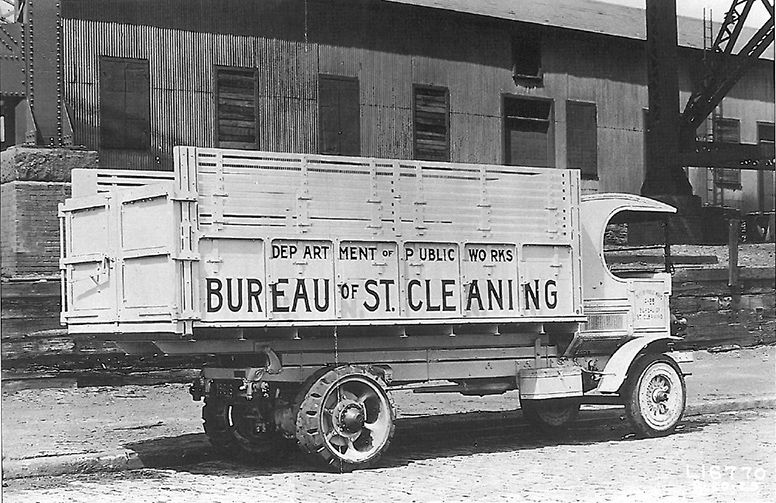
1840 - 1940 - The Sanitation Era Rapid urbanization created a new problem: too many people and too much waste in the streets. Outbreaks of diseases like cholera forced cities to act. Governments began building the first real waste management systems, including organized trash collection, sewer systems, and sanitation regulations. Waste became something to control, not just ignore.

1950 - 1970 - The Disposable Era
The 1950s were a turning point. After World War II, factories that once produced wartime goods shifted to consumer products and manufacturing capacity surged. Companies didn't just sell products; they sold a lifestyle where throwing things away was normal, even desirable. Disposable culture was enormously profitable. In 1955, Life Magazine cemented the idea with an article celebrating "throwaway living," aimed at the American housewife. We didn't accidentally become a throwaway society. We were sold one.
1970 - 2000 - The Recycling Era ♻️
By the late 1960s, waste was impossible to ignore. Landfills were overflowing, pollution was visible, and rivers were literally catching fire. People were paying attention. In 1970, the first Earth Day brought millions together and helped launch the modern environmental movement, and with it came a focus on consumer recycling.
The now-iconic chasing arrows symbol was designed by Gary Anderson, a college student, for a contest held by the Container Corporation of America. It was created with good intentions. But by the 1980s and 1990s, as the plastics industry faced growing pressure, it leaned into the recycling symbol to shift responsibility away from producers and onto individuals rather than reducing production at the source.

2000 - Today - The Convenience Explosion Era
If the Industrial Revolution created the conditions for waste and the Disposable Era normalized it, today's society has scaled it. Convenience didn't just grow; it became the expectation. Online shopping, food delivery, and fast fashion all shortened product lifespans and created more materials designed for minutes of use, with no systems to take them back. We didn't simply become more wasteful. We built a world where the easiest choice is also the most wasteful one.
Beyond Today - The Future of Waste Era
If every era before this one taught us anything, it's this: waste isn't inevitable. It's the result of how we design things, and that means it can be redesigned.
We're beginning to see a return to ideas that aren't new, just forgotten: refills, repairs, circular design, and businesses rethinking their systems from the ground up. For years, we've been told to "do our part," recycle more, buy better, try harder. But the future of waste isn't about doing more. It's about doing things differently.
If you're ready to do something different and enter the next era of waste, the Diversion Designers team is here to help.
Happy Earth Day from all of us at Diversion Designers!


Comments